Introduction
PVC ball valves have become an essential component in modern piping systems due to their durability, corrosion resistance, and cost-effectiveness. Designed to regulate or stop the flow of liquids with a simple quarter-turn operation, these valves are widely used across industries where reliable flow control is critical. From agriculture and water treatment to chemical processing and manufacturing, PVC ball valves offer excellent performance while requiring minimal maintenance.
In this article, we’ll explore the top industrial applications of PVC ball valves across different sectors and understand why they continue to be the preferred choice for efficient fluid management.
What Are PVC Ball Valves?
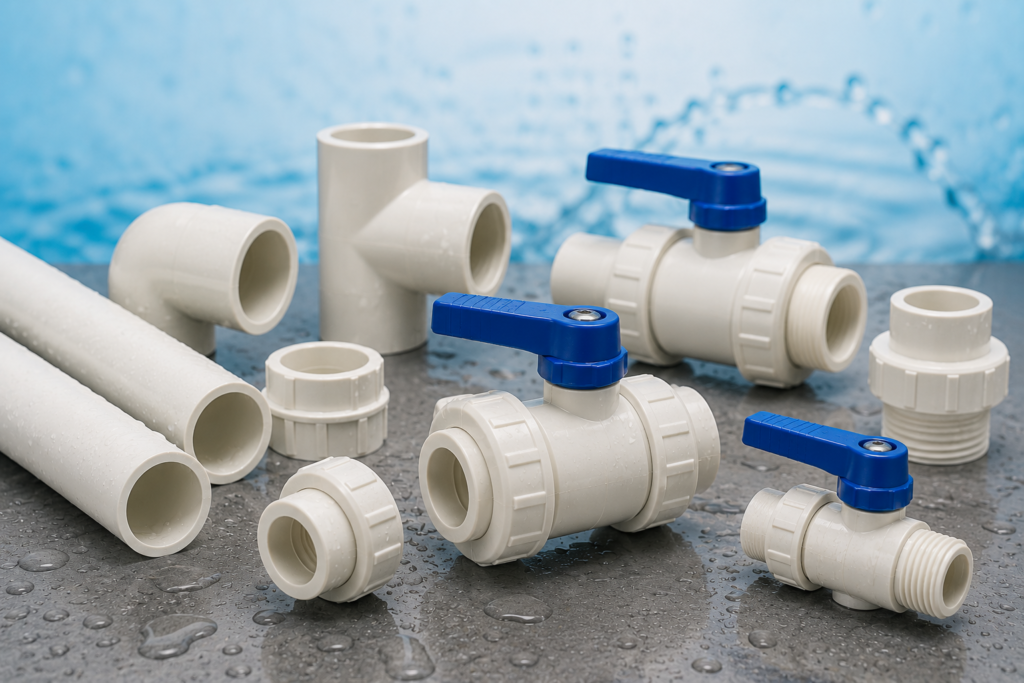
A PVC ball valve is a flow control device that uses a rotating ball with a central bore to allow or block the movement of fluids. When the handle is turned 90 degrees, the valve opens or closes, ensuring quick and effortless operation. Made from high-quality Polyvinyl Chloride (PVC), these valves are lightweight, resistant to corrosion, and suitable for a wide range of water and chemical applications.
Their simple design, long service life, and affordability make PVC ball valves an ideal solution for industrial and commercial piping systems.
Top Industrial Applications of PVC Ball Valves
1. Water Supply and Distribution Systems
One of the most common applications of PVC ball valves is in water supply networks. Municipal water systems, residential buildings, and commercial facilities rely on these valves to control water flow efficiently.
PVC ball valves are preferred because they:
- Resist rust and corrosion
- Ensure leak-free performance
- Require minimal maintenance
- Offer smooth operation for long-term use
Their durability makes them suitable for both indoor and outdoor water distribution systems.
2. Agricultural Irrigation Systems
Agriculture depends heavily on reliable water management, making PVC ball valves an indispensable component in irrigation networks. Whether it’s drip irrigation, sprinkler systems, or water distribution pipelines, these valves provide precise control over water flow.
Farmers choose PVC ball valves because they:
- Handle continuous water flow efficiently
- Resist fertilizer and chemical exposure
- Reduce water wastage
- Are easy to install and replace
Their affordability and long lifespan make them ideal for large-scale agricultural projects.
3. Chemical Processing Industries
Chemical plants require valves capable of handling corrosive liquids without compromising performance. PVC ball valves are highly resistant to many acids, alkalis, and chemical solutions, making them a reliable option for non-metallic piping systems.
Common applications include:
- Chemical transfer lines
- Dosing systems
- Storage tanks
- Laboratory pipelines
Their corrosion-resistant properties significantly reduce maintenance costs compared to traditional metal valves.
4. Water Treatment Plants
Water treatment facilities require dependable flow control to ensure efficient filtration, purification, and distribution processes. PVC ball valves are widely used throughout these systems because they can withstand continuous exposure to treated and untreated water.
Typical applications include:
- Filtration systems
- Reverse osmosis plants
- Chemical dosing units
- Distribution pipelines
Their resistance to scaling and corrosion helps maintain operational efficiency over extended periods.
5. Industrial Manufacturing Units
Manufacturing facilities often use PVC ball valves in cooling systems, process water pipelines, and utility services. Their quick shut-off mechanism allows operators to control fluid flow safely during maintenance or emergencies.
Industries such as textiles, food processing, pharmaceuticals, and packaging benefit from the reliability and low maintenance requirements of PVC ball valves.
6. Swimming Pools and Recreational Facilities
Swimming pool filtration systems rely on PVC ball valves to regulate water circulation efficiently. Their resistance to chlorinated water makes them an excellent choice for pool maintenance equipment.
Applications include:
- Pool filtration systems
- Water circulation pipelines
- Pump connections
- Maintenance shut-off points
Their ease of operation simplifies routine servicing and repairs.
7. Aquaculture and Fisheries
Fish farming and aquaculture operations require controlled water circulation to maintain healthy aquatic environments. PVC ball valves help regulate water flow in tanks, filtration units, and recirculation systems.
Their corrosion-resistant construction ensures reliable performance even in humid and water-intensive environments.
Why Industries Prefer PVC Ball Valves
PVC ball valves continue to gain popularity because they offer several advantages over conventional metal valves.
Corrosion Resistance
Unlike metal valves, PVC ball valves do not rust or corrode when exposed to water or many chemical solutions, making them ideal for harsh operating environments.
Lightweight Design
Their lightweight construction makes transportation, installation, and maintenance much easier, reducing labor costs and installation time.
Leak-Free Performance
Quality PVC ball valves provide tight sealing, minimizing leakage and improving system efficiency.
Cost-Effective Solution
PVC valves are more affordable than many metal alternatives while delivering excellent long-term performance, making them a practical investment for industrial projects.
Low Maintenance
With fewer moving parts and excellent resistance to scaling and corrosion, PVC ball valves require very little maintenance throughout their service life.
Choosing the Right PVC Ball Valve
Selecting the appropriate PVC ball valve depends on several factors, including:
- Operating pressure
- Pipe size
- Type of fluid being transported
- Temperature requirements
- Connection type (threaded, socket, or union)
Choosing high-quality PVC ball valves from a trusted manufacturer ensures reliable performance, longer service life, and enhanced system efficiency.
Conclusion
PVC ball valves have become a preferred flow control solution across multiple industries due to their durability, corrosion resistance, affordability, and ease of operation. Whether used in water supply systems, agriculture, chemical processing, manufacturing, aquaculture, or water treatment plants, these versatile valves deliver dependable performance while minimizing maintenance costs.
Investing in premium-quality PVC ball valves not only improves operational efficiency but also ensures long-lasting and leak-free performance in demanding industrial environments. As industries continue to prioritize reliable, cost-effective, and maintenance-friendly piping solutions, PVC ball valves remain one of the most practical choices for modern fluid control systems.